Yes, the Local Shop Costs More. Here's Exactly Where Your Extra Dollars Are Going
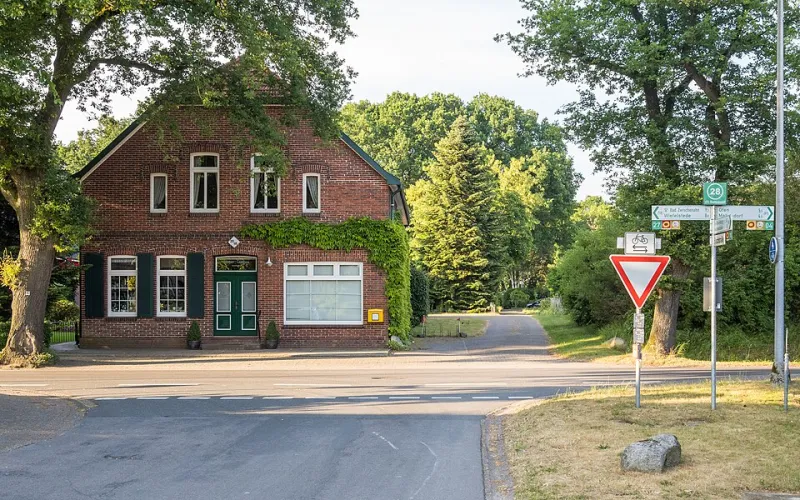
Photo: JoachimKohler-HB, CC BY-SA 4.0, via Wikimedia Commons
At some point, most of us have stood in a local shop, price tag in hand, doing the mental math. The same candle — or at least something pretty close to it — is $11 on Amazon. Here it's $18. The same cut of beef you could grab at the grocery chain down the road is $7.99 a pound. Here it's $13.
And even if you want to buy local, even if you believe in it philosophically, that gap is real. It adds up. And nobody has ever explained to you, in plain language, why it exists.
So let's do that.
The Supply Chain Nobody Talks About
When a national retailer sells you something for $11, that price reflects a supply chain built on scale that most small businesses simply cannot access. Big-box stores buy in quantities that unlock wholesale pricing tiers a local shop will never qualify for. They have dedicated logistics operations, warehousing infrastructure, and negotiated shipping rates that can shave dollars off the cost of every single unit before it ever hits a shelf.
Your local retailer, meanwhile, is often buying from a regional distributor or directly from a small producer — because that's who will actually sell to them in quantities that make sense. That's not inefficiency. That's just the reality of operating at a human scale. And those supply chain costs get baked into the sticker price you see.
Here's the part that often gets missed: the local shop's supply chain is also frequently shorter. That coffee roaster down the street sources beans from importers they've met in person and pays closer to fair-trade pricing. The butcher gets whole animals from farms two counties over. The price premium you're paying isn't always markup — sometimes it's the actual cost of doing things more carefully.
Overhead Isn't Optional
Let's talk about what it actually costs to keep a storefront open on Main Street.
Commercial rent in most downtown corridors runs anywhere from $20 to $50 per square foot annually, depending on the market. Add utilities, insurance, point-of-sale systems, credit card processing fees (typically 2.5–3.5% of every transaction), and basic maintenance, and a modest 1,200-square-foot shop might be carrying $8,000 to $15,000 in fixed monthly costs before a single employee is paid.
Then there's labor. A local business owner paying fair wages — not minimum wage, but genuinely livable wages — to two or three employees is carrying a payroll that a major retailer offsets through automation, self-checkout, and a corporate HR infrastructure that spreads costs across thousands of locations.
None of these costs are hidden. They're just invisible to customers who never had to think about them.
The Price of Actually Knowing What You're Selling
Here's something that doesn't show up on a balance sheet but absolutely shows up in pricing: expertise.
When you walk into a local running store, the person fitting you for shoes actually knows what they're talking about. When you ask the cheesemonger what pairs well with a Pinot Noir, they'll tell you — and they'll be right. That knowledge didn't come free. It came from training, from years of experience, from the owner who spent a weekend at a supplier workshop because they genuinely care about their product.
Big-box retail competes on price by, among other things, not paying for that kind of depth. The trade-off is a transaction that's fast and cheap but ultimately generic. The local shop is selling the expertise alongside the product. If you use it — and most customers do — it's worth something.
What "Cheap" Actually Costs the Community
This is where the conversation gets bigger than individual purchasing decisions.
Every dollar spent at a locally owned business recirculates through the local economy at a higher rate than dollars spent at a national chain. Studies from organizations like the American Independent Business Alliance have consistently found that local businesses return somewhere between 48 and 68 cents of every dollar to the local economy through wages, local vendor relationships, and owner spending — compared to roughly 14 cents for chain retailers.
That gap represents real things: tax revenue that funds schools and roads, jobs that support local families, and a commercial ecosystem that keeps a downtown viable rather than vacant.
When a local shop closes because it couldn't compete on price, the community doesn't just lose a store. It loses an employer, a tax contributor, a gathering place, and often a piece of institutional knowledge that nobody else carries.
Reframing the Premium
Here's a reframe worth sitting with: the reason big-box retail can charge less isn't that they've figured out some efficiency secret your local shop is too stubborn to adopt. It's that they've externalized costs onto workers (through suppressed wages), onto communities (through minimal local reinvestment), and onto suppliers (through pricing pressure that squeezes producers).
The "cheap" price you pay at a national chain is partially subsidized by someone else's compromise. The higher price at the local shop is often the honest price — the one that accounts for fair wages, sustainable sourcing, and a business model that isn't built on scale-driven cost-cutting.
That's not a guilt trip. It's just useful context.
For Business Owners: Stop Apologizing for Your Prices
If you're running a small business and you've ever found yourself reflexively apologizing when a customer winces at your pricing, this is your sign to stop.
You don't have to be defensive about what you charge. But you do have to be able to explain it — clearly, confidently, and without making the customer feel judged for asking. Know your story. Know your sourcing. Know what makes your product or service worth the premium, and say it out loud.
Customers who understand why something costs more are far more likely to pay it — and to come back. The ones who leave for the cheaper option probably weren't your long-term customer anyway.
The Bottom Line
Shopping local costs more. That's real, and it's okay to acknowledge it honestly. But "more expensive" and "overpriced" are not the same thing, and conflating them does a disservice to every small business owner who's doing the hard, expensive, often invisible work of keeping Main Street alive.
The next time you pick up a price tag and do that mental math, consider what the number is actually telling you. It might be the most transparent pricing you'll see all day.