What Separates a Thriving Downtown from a Ghost Town? The Answers Might Surprise You
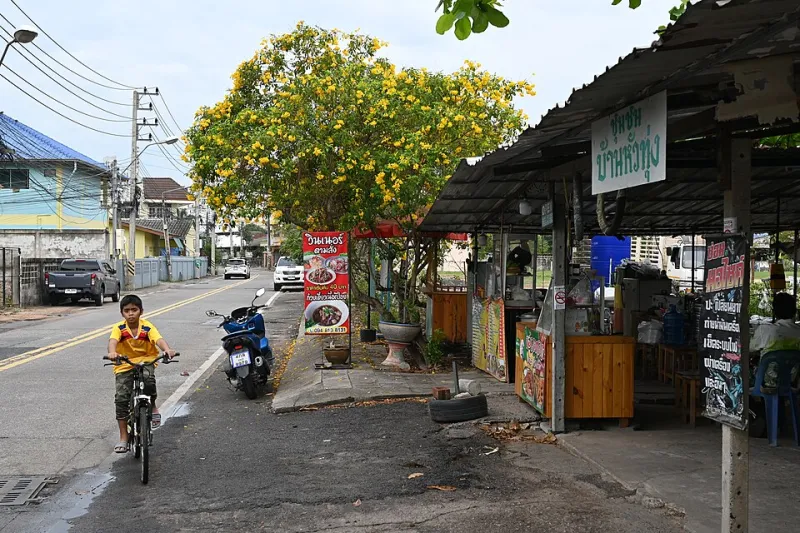
Photo: PattayaPatrol, CC BY-SA 4.0, via Wikimedia Commons
Drive through enough American towns and a pattern starts to emerge. One downtown has a coffee shop with a line out the door, a weekend farmers market, and a new boutique where a vacant lot used to be. Thirty miles down the road, another town center has three empty storefronts for every open business, a faded "For Lease" sign that's been up since 2019, and a dollar store anchoring what used to be a block of local retail.
Same country. Same economy. Wildly different outcomes.
So what's actually going on? Economists, urban planners, and local business advocates have been studying this divergence for years, and the picture that emerges is more nuanced — and more actionable — than most people expect. It's not just about proximity to a highway, or whether a big employer moved in. The communities that are genuinely turning things around share a handful of deliberate strategies that others can learn from.
The Myth of the "Natural" Downtown Revival
Let's get one thing out of the way first: thriving downtowns don't just happen. When a Main Street looks effortlessly vibrant, there's almost always a lot of effort behind the scenes that visitors never see — zoning changes, grant programs, landlord negotiations, and years of community organizing that quietly set the stage.
That's the first lesson. Passive hope is not a strategy.
The communities seeing real momentum have typically made a conscious decision to treat their downtown as an asset worth investing in — not a problem to manage or a nostalgia project to maintain, but a living economic engine that needs fuel, direction, and consistent attention.
Galesburg, Illinois: Betting on Identity
Galesburg, a small city in western Illinois, spent years watching its downtown contract after manufacturing job losses hit the region hard. Rather than chasing the same retail categories that had already left, city leaders and a local Main Street organization took a different approach: they leaned into what made Galesburg distinctly itself.
The town is the birthplace of poet Carl Sandburg, and it has a genuine railroad history that most places can only fake. Local stakeholders started building programming and business recruitment around those anchors — a literary arts scene, a railroad museum expansion, events tied to local heritage. New businesses that fit that identity were actively courted with below-market lease incentives negotiated through a downtown development fund.
The result wasn't an overnight transformation, but over about a decade, vacancy rates dropped meaningfully and new food and beverage businesses — always a strong signal of foot traffic confidence — started filling in gaps that had been empty for years.
Bentonville, Arkansas: The Anchor Institution Effect
Not every town has a billion-dollar art museum to work with, but Bentonville's story still holds useful lessons for communities at any scale. When the Crystal Bridges Museum of American Art opened in 2011, it didn't just bring visitors — it fundamentally changed what downtown Bentonville could be. Retailers, restaurants, and entrepreneurs followed, drawn by a newly established identity as a cultural destination.
The broader principle here is about anchor institutions. Every community has something — a university, a hospital system, a regional events venue, a historic site — that draws people from outside the immediate neighborhood. The towns that are winning have figured out how to connect those anchors to their Main Street corridors in practical ways: wayfinding signage, shuttle programs, joint marketing, and making sure there's actually something worth walking to when visitors arrive.
Traverse City, Michigan: The Small Business Recruitment Model
Traverse City has become something of a case study in intentional business recruitment. Rather than waiting for the market to fill vacancies organically, the downtown development authority got proactive — identifying gaps in the retail and dining mix, then actively recruiting businesses to fill them.
That meant doing real market research, understanding what residents were driving out of town to find, and then making targeted pitches to entrepreneurs who might not have otherwise considered the location. Paired with a façade improvement grant program and streamlined permitting for new downtown businesses, the city created conditions where opening on Main Street felt less risky than it did in peer communities.
It's a model that requires coordination between city government, a downtown organization, and willing property owners — but where those three groups align, the results tend to be durable.
Greenville, South Carolina: The Long Game
Greenville is frequently cited as one of the most dramatic downtown turnarounds in the country, and its trajectory is worth understanding. In the 1970s, its Main Street was dominated by a highway overpass and felt more like a through-road than a destination. The city made the expensive, controversial decision to tear down the overpass and reclaim the waterfall it had been hiding.
That single infrastructure decision, paired with decades of consistent investment in streetscaping, public spaces, and business-friendly policy, transformed Greenville into a regional dining and entertainment hub. The lesson isn't that every city needs to demolish something — it's that physical environment matters enormously, and sometimes the boldest investment pays the biggest dividend.
What Declining Downtowns Have in Common
On the flip side, the communities that are struggling tend to share a few patterns. Fragmented leadership — where the city, the chamber, the development authority, and property owners are all pulling in different directions — is probably the single biggest obstacle. High commercial rents relative to realistic revenue potential keep storefronts empty even when entrepreneurs are interested. And a lack of consistent programming means that even when good businesses open, there's not enough foot traffic to sustain them.
Perhaps most damaging is a kind of learned helplessness — a community narrative that the downtown can't compete with the big-box corridor on the edge of town, so why try. That mindset becomes self-fulfilling faster than almost anything else.
The Practical Takeaway
If you're a business owner, a local official, or just someone who cares about your community's economic health, the evidence from these turnaround stories points to a few concrete things worth pushing for: a unified downtown organization with real resources and authority, a landlord engagement strategy that addresses vacancy rather than just waiting it out, programming that gives people a reason to show up on a regular basis, and a clear identity that tells outsiders — and insiders — what your downtown is actually for.
None of it is easy. But none of it is mysterious either. The towns that are thriving figured out that Main Street doesn't take care of itself. It takes care of the people who show up for it.