Good Values Don't Pay the Electric Bill: The Quiet Moral Reckoning Happening Inside Small Businesses
There's a version of the small business story that gets told at chamber of commerce breakfasts and local award ceremonies. The owner had a dream, they built something from scratch, they stayed true to their community, and it all worked out. It's a good story. It's just not the whole story.
The fuller version — the one that gets whispered over coffee after the event ends — involves a lot of moments where the dream and the spreadsheet stopped agreeing with each other. Where the owner who swore they'd only source locally started quietly ordering from a national distributor because the math simply didn't work anymore. Where the shop that prided itself on paying above minimum wage had to make a call nobody wanted to make.
This is the conversation Main Street is having right now, even if it's not always having it out loud.
The Moment the Values and the Numbers Stop Adding Up
Ask almost any independent retailer or small service business owner about their founding principles, and you'll get a pretty consistent list: pay people fairly, source responsibly, serve customers honestly, give back to the community. These aren't just talking points. For most of these folks, those values are the whole reason they went into business instead of taking a corporate job somewhere.
But here's the thing about principles — they're easiest to hold when business is good.
When foot traffic slows, when a big-box competitor opens two miles away, when a supplier raises prices and a landlord raises rent in the same quarter, those principles start to feel less like a foundation and more like a luxury. And that's when the real test begins.
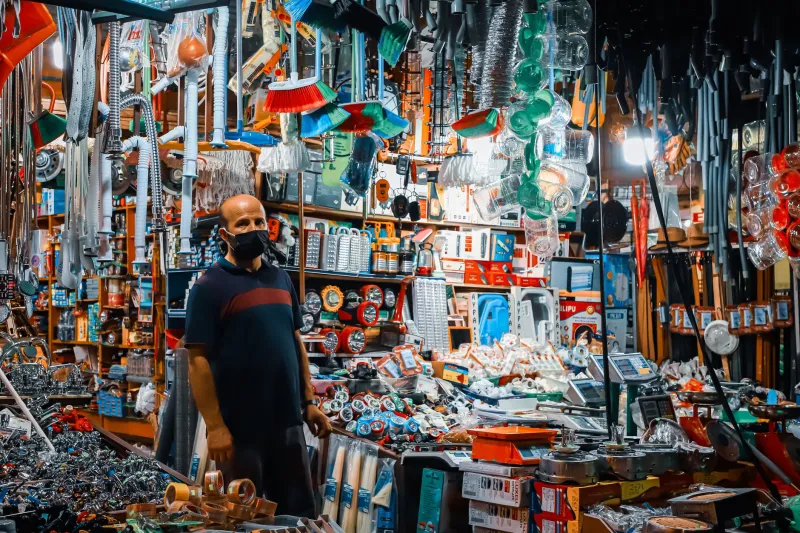
A hardware store owner in the Midwest described it plainly: "I built my whole reputation on carrying American-made tools. Then one of the national chains moved in and started selling the imported version of the same product for thirty percent less. I lost a chunk of my regulars in about six months. I had to ask myself — do I hold the line and maybe close in two years, or do I make a compromise and stay open?"
He made the compromise. He now carries a mix. He still loses sleep over it.
What "Cutting Corners" Actually Looks Like From the Inside
The phrase "cutting corners" sounds dramatic, like fraud or negligence. But in the day-to-day reality of small business ownership, it's usually far more mundane — and far more agonizing.
It's the café owner who switches to a cheaper coffee supplier because the one she believed in raised their wholesale prices past what her customers will absorb. It's the boutique owner who starts ordering from overseas manufacturers after years of buying domestic because her rent went up for the third year in a row. It's the landscaping company that stops offering the paid sick leave it was proud of because two employees called out during peak season and the owner almost lost a major contract.
None of these people are villains. They're survivors making calculated tradeoffs under real financial pressure. But that doesn't mean they feel good about it.
"I used to talk about our sourcing on a chalkboard by the register," said one specialty grocery owner in the South. "I took it down last year. I couldn't stand there and tell that story anymore when I knew what I'd changed behind the scenes. It felt dishonest. But the alternative was closing, and then none of it matters anyway."
The Competitor They Can't Beat Playing by the Original Rules
A big part of what's driving this reckoning is the simple, uncomfortable reality of who small businesses are competing against.
Large corporations aren't operating under the same constraints. They have supply chain leverage that an independent owner can't dream of. They can absorb losses in one market to undercut prices in another. They don't have a personal relationship with their employees that makes layoffs emotionally devastating. They answer to shareholders, not to the town.
When a small business owner tries to compete on price while also paying a living wage, sourcing ethically, and maintaining quality service, they are essentially choosing to run a harder race with more weight on their back. Sometimes that's a race worth running. Sometimes it's one you can't finish.
The frustration that surfaces in conversations with Main Street owners isn't just about money — it's about fairness. They feel like the rules reward scale and punish conscience, and they're not entirely wrong about that.
Finding the Middle Ground Nobody Talks About
Here's what doesn't get enough attention: a lot of small business owners are finding creative ways to hold onto their core values even when they can't hold onto every single practice that once defined them.
Some are being radically transparent with their customers about the tradeoffs they've had to make — and finding that honesty actually builds loyalty rather than eroding it. A bakery owner in New England started posting a simple monthly note on her website explaining what she was able to source locally that month and what she couldn't, and why. Her regulars responded with more support, not less.
Others are narrowing their focus. Instead of trying to do everything ethically — sourcing, wages, packaging, giving — they're picking the one or two things that matter most to them and their customers and doubling down on those, while letting go of the rest without as much guilt.
And some are leaning harder into community in ways that don't cost money. Hosting local events, partnering with neighboring businesses, being present and visible and genuinely invested in the neighborhood. That kind of value doesn't show up on a balance sheet, but customers feel it.
The Question That Doesn't Have a Clean Answer
At the end of the day, there's no formula for navigating the tension between values and survival. Every business owner draws their own line, and those lines are drawn in different places for different reasons.
What's clear is that more Main Street owners are being forced to find that line sooner than they expected, under more pressure than they planned for. The economic environment right now — rising costs, aggressive big-box competition, shifting consumer habits — is accelerating a reckoning that might have played out more slowly in a kinder market.
The ones who seem to be managing it best aren't the ones who found a perfect solution. They're the ones who stopped pretending the tension doesn't exist, got honest with themselves and their customers about it, and made peace with the fact that imperfect and open beats perfect and silent every time.
Running a business with integrity doesn't mean running a business without compromise. It means knowing which compromises you can live with — and which ones would hollow out the whole thing from the inside.
That's a harder story than the one told at the awards breakfast. But it's the one worth telling.