Shelves Full, Bank Account Empty: The Dead Stock Crisis Quietly Bleeding Small Retailers Dry
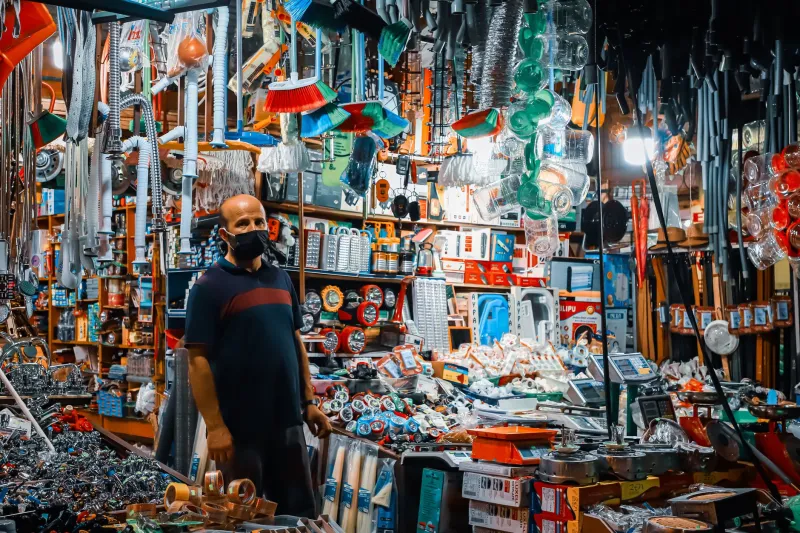
Walk into almost any independent retail shop on Main Street and you'll find it somewhere. Maybe it's a rack of seasonal items that never moved. A shelf of specialty products that seemed like a great idea at the time. A storage room stacked floor-to-ceiling with boxes nobody's touched since the Obama administration. It's dead stock — and it's one of the most quietly destructive forces in small business finance.
The problem isn't just that the stuff isn't selling. It's that it's actively costing money every single day it sits there. And most owners, frankly, have no idea how bad it's gotten.
The Inventory Ghost Nobody Talks About
Marcella Torres has run a home goods boutique in a mid-sized Ohio town for eleven years. She's good at what she does — loyal customers, solid reputation, a storefront that gets compliments from passersby. But two years ago, she sat down with her accountant and had what she describes as a "genuinely nauseating" conversation.
"We went through the numbers and figured out I had about $34,000 in inventory that hadn't moved in over eighteen months," she says. "I knew it was bad. I didn't know it was that bad."
That $34,000 wasn't just money tied up. It was money bleeding out through what accountants call carrying costs — the real, ongoing expense of holding inventory that isn't generating revenue. Storage space, insurance, the opportunity cost of capital that could be deployed elsewhere, potential spoilage or obsolescence, and even the labor cost of working around it. Industry estimates put average carrying costs somewhere between 20 and 30 percent of inventory value per year. Do that math on $34,000 and you're looking at somewhere between $6,800 and $10,200 evaporating annually just to keep the stuff you can't sell.
"I wasn't thinking about it that way," Torres admits. "I just thought, okay, it's not selling great, but at least I have the product. Like having it was somehow better than not having it. That's completely backwards."
The Psychology of Holding On
Here's where it gets interesting — and a little uncomfortable. Dead stock isn't purely a logistics problem. It's a psychological one.
Retail buyers, especially owner-operators who made the purchasing decisions themselves, have a hard time writing off slow-moving product. There's ego involved. There's the sunk cost fallacy working overtime. There's the lingering hope that maybe, somehow, the right customer is going to walk through that door and snap up all forty-seven units of the artisanal candle holders that seemed so promising at the trade show.
Dr. Lisa Fenwick, a consumer behavior researcher who consults with regional retail associations, says this pattern is almost universal. "Small business owners are emotionally attached to their inventory in ways that corporate buyers simply aren't," she explains. "A regional chain has a system that flags underperforming SKUs and triggers automatic markdowns. An independent owner looks at that same product and thinks about the vendor relationship, the trip they took to find it, the vision they had for it. It creates decision paralysis."
That paralysis is expensive. Every month a dead product sits on the shelf is a month it's not contributing to cash flow, not freeing up display space for something that might actually sell, and not getting out the door at even a fraction of its original value.
What the Numbers Actually Look Like
Jamie Kowalski runs a sporting goods and outdoor gear shop in a small Wisconsin town near a popular lake district. He started tracking his dead stock systematically about three years ago after a rough holiday season left him with a warehouse full of product he couldn't move.
"I built a spreadsheet — nothing fancy — and started flagging anything that hadn't sold a single unit in ninety days," he says. "The first time I ran the numbers, I almost fell out of my chair. I had product in seventeen different categories that qualified. Seventeen."
Kowalski calculated that roughly 22 percent of his total inventory investment was tied up in what he now calls "ghost stock." More alarming was realizing how long some of it had been there. A line of specialty fishing accessories had been sitting untouched for nearly two years. A rack of branded performance gear from a manufacturer that had since gone out of business was occupying prime floor space near the entrance.
"That rack was the first thing customers saw when they walked in," he says, shaking his head. "The first thing. And it was stuff I couldn't give away."
Getting Creative to Get It Gone
Once business owners confront the dead stock problem honestly, the next challenge is figuring out what to do about it — and the options are more varied than most people realize.
The obvious move is aggressive discounting, and sometimes that's the right call. Kowalski ran a "Clearance Blitz" weekend, dropped prices to cost or below on his worst offenders, and generated enough cash flow to fund a full reorder of his top-performing product lines. "I lost money on the product itself, but I freed up capital and shelf space that made me money going forward," he says. "Net positive."
But deep discounting isn't always feasible — or desirable. Torres took a different approach. She partnered with a local nonprofit running a community resale shop and donated a significant portion of her dead stock. The move generated a charitable deduction that offset a chunk of the original inventory cost, cleared out her back room, and earned her genuine goodwill in the community.
"People found out I donated all that stuff and I got more thank-you notes than I've ever gotten for anything," she says. "It turned a financial loss into a community win."
Other retailers have experimented with inventory swap arrangements — informal networks of non-competing local shops that trade slow-moving product for items more suited to their respective customer bases. A gift shop with excess kitchenware might swap with a kitchen supply store sitting on decorative items. It sounds unconventional, but several Main Street business associations have started facilitating exactly these kinds of exchanges.
Online liquidation platforms have also become a more viable tool for independent retailers. Marketplaces that specialize in bulk closeout merchandise let owners offload large quantities at pennies on the dollar — not ideal, but often better than continued carrying costs.
Building a System That Prevents the Next Pile
The owners who've dealt with serious dead stock problems tend to come out the other side with a new religion around inventory discipline. Torres now does a formal inventory review every sixty days and has a hard rule: anything with zero movement at ninety days gets a markdown, automatically, no exceptions.
Kowalski implemented a simple scoring system that rates every product on velocity, margin, and seasonal relevance before he reorders. "I ask three questions now before I buy anything," he says. "Do I have proof people want this? Do I have space for it? And what's my exit strategy if it doesn't move? If I can't answer all three, I don't buy it."
It sounds simple. It is simple. But for business owners who spent years buying on instinct and optimism, building that kind of systematic discipline requires real effort.
The Cost of Doing Nothing
Here's the hard truth that every independent retailer needs to sit with: dead stock doesn't stay static. It gets worse. Products become more obsolete. Trends shift further away. The longer you hold it, the less it's worth and the more it's cost you to hold.
For Main Street shops operating with limited capital and limited floor space, that math becomes existential fast. The businesses that are thriving aren't necessarily the ones with the best product instincts — they're the ones with the discipline to cut their losses early, move on, and keep their inventory working as hard as they do.
The ghost in your back room isn't going away on its own. Time to deal with it.