Built It From Nothing, Can't Give It Away: The Inheritance Problem Hiding Inside Main Street's Success Stories
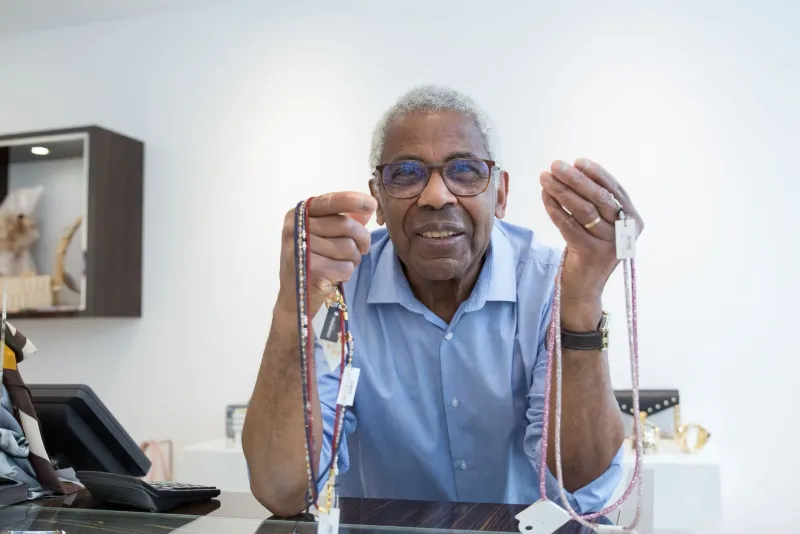
Diane Kowalski spent 31 years building her kitchen supply store in Eau Claire, Wisconsin into something her accountant calls "a real asset." The building is paid off. The customer base is loyal. Revenue has been steady, sometimes even impressive, for the better part of two decades. By most measures, Diane did everything right.
Her three adult children want absolutely nothing to do with it.
"They love me. They love that I built it," she says. "But they've got careers, mortgages, their own lives. Nobody's waiting in line to take over a retail shop that needs 60 hours a week just to keep the lights on."
Diane's situation isn't unusual. Across Main Streets in every state, a quiet crisis is unfolding inside some of the most successful-looking small businesses in America. Owners who poured everything into their shops — their savings, their labor, their identity — are approaching retirement age and discovering that what they built doesn't transfer as cleanly as they'd hoped. A profitable business and an inheritable business, it turns out, are two very different things.
The Valuation Trap
When a small business owner talks about what their shop is "worth," they're usually talking about a combination of physical assets, inventory, goodwill, and cash flow. An appraiser might look at all of that and arrive at a number that sounds genuinely impressive — $400,000, $600,000, maybe more for a well-established operation.
But here's where things get complicated. That number assumes someone wants to buy it, run it, and sustain it. And increasingly, the pool of people willing to do that is shrinking.
Heirs face a specific version of this problem. Inheriting a business isn't like inheriting a house you can sell or rent out. A retail shop, a diner, a hardware store — these require active management, institutional knowledge, community relationships, and a tolerance for risk that not everyone has. The moment the original owner walks out the door, some portion of what made that business valuable walks out with them.
Customers who came in because they trusted Diane don't automatically transfer that trust to Diane's son, who grew up in a different city and has never worked a register in his life.
The Labor Equation Nobody Wants to Talk About
There's another uncomfortable number buried in most small business valuations: the owner's own labor. Many Main Street shops are profitable largely because the owner pays themselves below market rate, works hours no employee would accept, and absorbs costs — like the occasional vendor favor or the after-hours emergency fix — that never show up in the books.
When you strip that out and ask what the business would actually cost to run with a full staff being paid fair wages, the math often changes dramatically. A shop that clears $80,000 a year for an owner who works 70 hours a week might clear almost nothing if you had to hire someone to do what that owner does.
Heirs who do the math — or who've watched their parents work themselves ragged for years — frequently come to the same conclusion: this isn't an inheritance, it's a job offer with no salary guarantee.
What the Next Generation Actually Wants
It's tempting to frame this as a generational attitude problem, but that's too easy. Younger people aren't allergic to hard work or entrepreneurship. What they're often allergic to is inheriting someone else's version of entrepreneurship — one that was built around a specific person's skills, relationships, and risk tolerance.
A millennial who might happily launch their own concept from scratch often has no interest in stewardship. Taking over a going concern means inheriting its debts, its vendor relationships, its lease terms, its reputation — the good and the bad. It means becoming a curator of someone else's vision rather than the author of their own.
That's a fundamentally different proposition, and pretending otherwise doesn't help anyone.
The Owners Who Are Getting It Right
Some Main Street business owners are finding ways to bridge this gap, but it requires starting earlier and thinking differently than most people expect.
A few strategies that are actually working:
Separating the real estate from the business. Owners who own their building outright are increasingly transferring the property into a family trust or LLC, decoupling it from the business operations. Even if the shop eventually closes, the family retains a valuable asset. The building becomes the inheritance; the business becomes optional.
Bringing heirs in as investors, not operators. Some owners are restructuring so that family members can hold ownership stakes and collect returns without being required to run the day-to-day. A professional manager handles operations; the family collects a share of profits. It's a harder structure to set up, but it separates financial inheritance from operational obligation.
Planning for a sale, not a handoff. Increasingly, succession planning on Main Street means building the business to be sellable to an outside buyer — and treating that sale price as the family's inheritance. This means cleaning up financials, documenting processes, reducing owner dependency, and positioning the business as something that can run without its founder. The proceeds fund retirement and become the legacy, not the shop itself.
Starting the conversation embarrassingly early. Business advisors who specialize in small business transitions consistently say the same thing: most owners wait too long. Having an honest conversation with your kids at 55 is very different from having it at 68 when you're already burned out and the lease is up for renewal.
The Emotional Weight of Letting Go
None of this is purely financial, of course. For many Main Street owners, the business isn't just an asset — it's the central fact of their adult lives. It's where they spent their best years, where they know everyone's name, where their identity lives. The idea that their children might not want to carry that forward, or that the right move might be to sell it to a stranger, can feel like a kind of failure.
It isn't. Building something valuable enough that it has real options — including the option to be sold — is the goal. The trap is confusing the continuation of the business with the success of the family.
Diane is working with a broker now. She's not thrilled about it, but she's clear-eyed. "I want my kids to benefit from what I built," she says. "If the way that happens is through a sale, then that's what it is. I'd rather they get something real than inherit a burden they didn't ask for."
That's not a defeat. On Main Street, after 31 years of doing it right, that's wisdom.