You Can't Add 'Feels Like Home' to a Cart: The Emotional Premium Keeping Main Street Alive
The Transaction Nobody Talks About
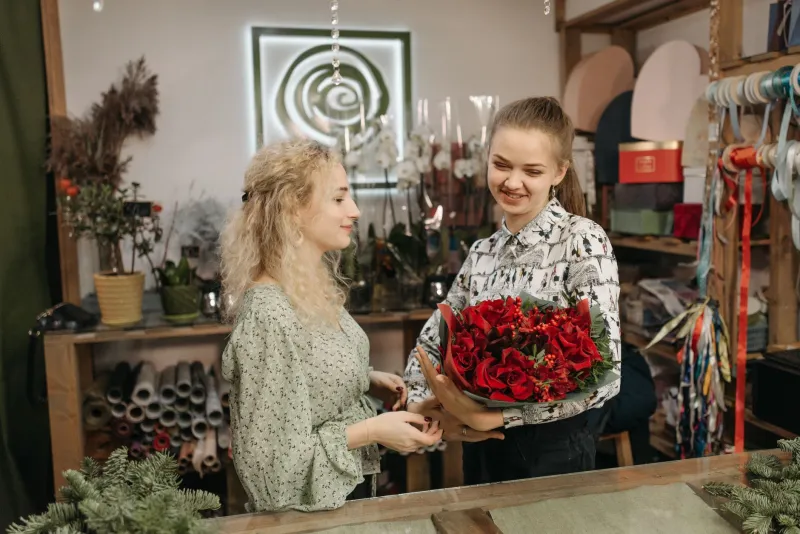
Walk into a locally owned shop on almost any Main Street in America, and something happens before you even touch a product. Maybe the owner looks up and says your name. Maybe there's a handwritten chalkboard sign cracking a joke about the weather. Maybe the whole place just smells like cedar and coffee and something vaguely familiar you can't quite name.
That's not an accident. And it's not free.
More and more, independent retailers are recognizing that the experience they offer — the texture of it, the warmth of it — carries genuine monetary value. Shoppers aren't just buying a candle or a pair of boots or a birthday card. They're buying the feeling that comes wrapped around it. And here's the kicker: a growing body of consumer research suggests they'll pay a meaningful premium to get it.
Call it the nostalgia markup. Call it the belonging bonus. Whatever you name it, it's real, it's quantifiable, and savvy small business owners are learning how to build it deliberately into everything they do.
What Shoppers Are Actually Craving
The rise of e-commerce was supposed to make physical retail irrelevant. In some categories, it came close. But somewhere in the middle of all that frictionless convenience, something got lost — and consumers started noticing the absence.
Research from firms tracking retail behavior consistently finds that a significant share of shoppers report feeling worse after online purchases than they expected to. The package arrives, the dopamine fades fast, and there's no story attached to the object sitting on the doorstep. No face. No moment. Just a cardboard box and some packing peanuts.
Contrast that with the customer who drives twenty minutes out of her way to buy olive oil from the specialty food shop where the owner once spent fifteen minutes explaining the difference between two Sicilian varieties. She paid three dollars more per bottle. She came back six times last year. She told four friends.
That's the transaction local retail is uniquely positioned to offer — and it has almost nothing to do with the olive oil.
"People are starved for genuine human interaction," says one gift shop owner in a mid-size Ohio river town who asked to be identified only by her first name, Dana. "They come in for a present and they stay for forty-five minutes. I've had customers cry — actually cry — because nobody had asked them how they were doing in a really long time. That's not something Amazon has figured out yet."
Putting a Number on It
So how do you price a feeling? That's the practical question lurking behind all of this, and it's one that small business owners navigate more intuitively than strategically — at least at first.
The honest answer is that the premium is already built into most independent retail prices whether owners plan it that way or not. Smaller purchase volumes, local sourcing, higher-touch staffing — these all push costs up compared to big-box competitors. The question isn't whether to charge more. It's whether customers understand why they're paying more, and whether the experience justifies it in a way they can feel.
The businesses doing this well tend to share a few habits. They tell stories — about the maker, the origin, the why behind the product. They create environments that reward lingering, not just purchasing. And they build relationships that extend past the sale, through follow-up notes, loyalty that feels personal rather than points-based, and genuine community involvement.
A hardware store in rural Vermont reportedly doubled its gift and home goods section after noticing that customers who came in for screws kept wandering over to browse locally made items. The owner started hosting Saturday morning coffee hours — free, no pitch, just conversation. Foot traffic increased. Average transaction value climbed. The screws are still there. But they're not really the point anymore.
The Chain Store Can't Copy This
Here's what keeps independent retailers competitive in a way that's genuinely hard to replicate at scale: authenticity doesn't franchise well.
A national chain can hire friendly staff. It can pipe in pleasant music and arrange products to feel curated. It can even run a "shop local" marketing campaign, which, yes, that has happened. But it cannot manufacture the specific, rooted sense of place that comes from a business that grew up alongside its community — that survived a flood, sponsored the Little League team, stayed open through a rough couple of years because the owner believed in the block.
That history is the product. And customers, especially younger ones who grew up in a world of relentless digital sameness, are increasingly hungry for something that feels earned rather than engineered.
Millennial and Gen Z shoppers in particular — long caricatured as the generation that killed everything from chain restaurants to department stores — are actually driving some of the strongest foot traffic on revitalized Main Streets across the country. What they're looking for isn't a throwback to some idealized past. It's texture. Specificity. The sense that the place they're standing in could only exist here, in this town, with these people.
Making the Feeling Intentional
For business owners reading this and nodding along, the practical takeaway is this: stop treating the experiential side of your shop as a nice-to-have and start treating it as a core product.
That means thinking deliberately about what story your space tells the moment someone walks in. It means training staff — or, if you're a solo operator, training yourself — to engage in ways that go beyond transactional. It means connecting your inventory to local narratives wherever possible: the beekeeper two towns over, the ceramicist who graduated from the high school up the street.
It also means being comfortable charging what the experience is worth. Apologizing for your prices, or reflexively matching discounts you can't sustain, undermines the very premium you've worked to create. Customers who genuinely value what you offer will pay for it. The ones who won't were probably never your customers to begin with.
The Bottom Line on Belonging
Main Street has always sold more than merchandise. The businesses thriving right now are the ones who've figured out how to make that explicit — to turn warmth and community and story into a conscious part of the value proposition rather than a happy accident.
Convenience is a race to the bottom, and the biggest players in the world have already won it. But belonging? That's a race with no finish line, and local retail has a head start nobody can buy their way into.
The feeling is the product. Price it accordingly.