Strip Malls Are Eating Main Street's Lunch — Here's How Local Shops Are Fighting Back

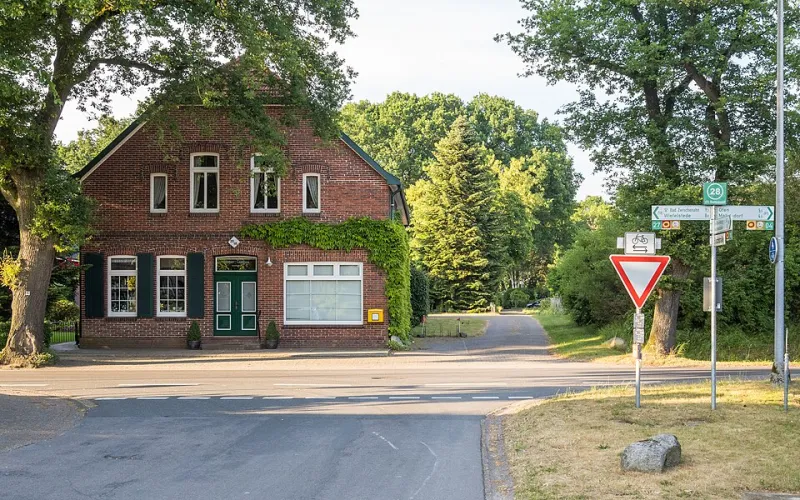
Photo by Photo by Michael Hart on Unsplash on Unsplash
Drive about three miles outside almost any small American city right now and you'll find the same scene: a freshly paved parking lot the size of a small airport, a Chili's on one end, a Planet Fitness on the other, and somewhere in the middle, a sprawling strip mall doing brisk business while the downtown two miles away quietly loses ground.
It's not a new story. But the pace has picked up, and the consequences for Main Street merchants are starting to feel less like a slow leak and more like a burst pipe.
According to the International Council of Shopping Centers, suburban retail centers have consistently outperformed traditional downtown corridors in foot traffic recovery since 2021. Meanwhile, the National Main Street Center has documented that independent downtown merchants in mid-sized American cities are seeing average foot traffic still running 15 to 20 percent below pre-pandemic baselines. The gap isn't closing — in many places, it's widening.
So what exactly is pulling shoppers toward those outlying centers? And more importantly, what are the savviest Main Street operators doing about it?
The Convenience Trap
Let's be honest about something: strip malls are genuinely convenient. That's not a knock on the people who shop there — it's just physics. When you can park for free thirty feet from the front door, grab groceries, drop off dry cleaning, and pick up a birthday card in one loop, that's a powerful value proposition. Time is the one resource nobody has enough of, and suburban retail centers have engineered themselves around that reality.
There's also a psychological dimension worth understanding. Researchers who study retail behavior call it "errand clustering" — the tendency for consumers to chain multiple purchases together in a single trip. Strip malls are basically errand-clustering machines. They've built their entire model around it.
Downtown corridors, by contrast, were designed for a different era. Parallel parking, metered spots, one-way streets, construction detours — these aren't just minor annoyances. For a tired parent with two kids and forty-five minutes to spare, they're dealbreakers.
"We lost a lot of casual shoppers," admits Dana Kowalski, who owns a kitchen goods store in a mid-sized Ohio river town. "The people who used to pop in on a Tuesday because they were already downtown — those trips dried up. We had to completely rethink who we were actually serving."
What the Data Actually Shows
Here's where it gets interesting. When researchers dig past the raw traffic numbers, a more nuanced picture emerges. Shoppers who visit downtown merchants spend more per trip than their strip mall counterparts — often significantly more. A 2023 study from Advocates for Independent Business found that consumers who deliberately chose a locally owned retailer over a chain spent an average of 48 percent more per visit.
The problem isn't the quality of the transaction. It's the frequency. Downtown shops are getting fewer visits, but the visits they do get tend to be higher value. That's actually useful intelligence — if you know your customers are coming less often but spending more when they do, you can build a business model around that reality instead of fighting it.
It also suggests something important about who Main Street's real customer base is. It's not the convenience shopper. That battle is probably already lost. The winnable customer is the intentional shopper — someone who is choosing to come downtown because the experience is worth the effort.
Becoming a Destination, Not Just a Store
The merchants who are holding their own — and in some cases genuinely thriving — have largely figured this out. They've stopped trying to compete on convenience and started competing on something strip malls structurally cannot offer: a reason to make the trip.
That looks different depending on the business. For some, it's events. A bookshop in Vermont started hosting weekly author readings and trivia nights, turning a quiet Tuesday into a packed house. A running shop in North Carolina converted part of its floor space into a training hub with free group runs every Saturday morning. These aren't just marketing stunts — they're building a community of regulars who feel ownership over the space.
For others, the strategy is radical curation. Rather than trying to carry a broad inventory and compete with the big-box stores on selection, they've gone deep in a narrow lane. One hardware store in rural Wisconsin famously carries over 400 types of screws and fasteners — a selection that makes professional contractors drive past two Home Depots to get there. You can't Google your way to that kind of expertise, and you definitely can't find it at a strip mall.
The Walkability Wildcard
Here's an angle that doesn't get nearly enough attention: walkability is quietly becoming a competitive advantage, especially for certain demographics.
Millennials and Gen Z consumers — who now represent a growing share of retail spending — consistently rank walkable, mixed-use neighborhoods higher in lifestyle preference surveys. Remote workers who relocated to smaller cities during the pandemic often specifically chose communities with active downtowns. These aren't people who are indifferent to the strip mall versus Main Street question — many of them actively prefer the latter.
Smart merchants are leaning into this. They're partnering with neighboring businesses to create joint promotions — "shop the block" passport programs, shared loyalty rewards, cross-promotional events — that turn a single errand into a full afternoon experience. When the bookshop, the wine bar, the cheese shop, and the boutique candle store all coordinate, suddenly downtown isn't a hassle. It's a Saturday.
"We started thinking of ourselves less as individual stores and more as a neighborhood," says Marcus Tillman, who owns a menswear shop in a revitalized district in Tennessee. "Once we got that mindset, everything changed. We're not competing with each other. We're competing with staying home."
The Hard Truth
None of this is easy, and it would be dishonest to pretend otherwise. Some Main Street corridors are genuinely struggling in ways that individual merchants can't solve alone. Parking infrastructure, municipal investment, anchor tenant vacancies — these are systemic issues that require city-level solutions.
But within those constraints, the merchants who are winning share a common trait: they've accepted that the old model — open your doors and wait for foot traffic — is over. The new model requires intention, creativity, and a willingness to be the reason someone drives past the strip mall.
That's a harder job. It's also, arguably, a more interesting one.