Big Tech Tools, Small Business Soul: How Main Street Is Playing the Digital Game on Its Own Terms
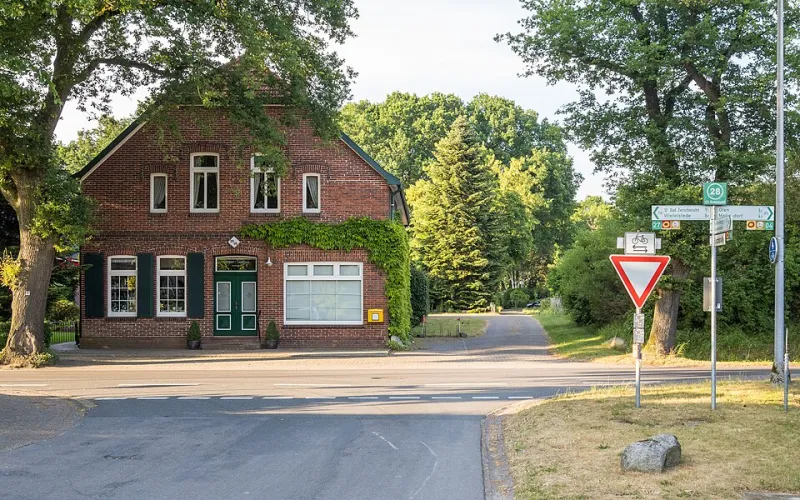
Photo: JoachimKohler-HB, CC BY-SA 4.0, via Wikimedia Commons
For a while, the conversation around small business and technology felt like it only had two settings: panic or surrender. Either the algorithms were going to swallow independent shops whole, or local owners had to hand over their data, their margins, and their identity just to stay relevant.
But spend some time talking to the owners actually doing it well, and a more interesting picture starts to emerge.
Across the country, Main Street businesses are quietly figuring out how to use the same platforms and tools that once felt like existential threats — and using them in ways that strengthen, rather than replace, what makes them worth visiting in the first place.
The Shift Nobody Announced
It didn't happen overnight, and there was no press release. But somewhere in the last few years, a meaningful number of small business owners stopped asking "how do I avoid tech" and started asking "how do I use it without losing myself?"
The distinction matters. The first question leads to isolation. The second leads to something much more useful: a strategic relationship with digital tools that's defined by the business owner, not by the platform.
"I think a lot of us went through a phase where we felt like we had to do everything," said Priya Anand, who owns a home goods and gift shop in Asheville, North Carolina. "Every platform, every trend, every new feature. It was exhausting and it wasn't working."
She eventually pulled back, audited what was actually bringing customers through the door, and rebuilt her digital presence around two things: her Google Business Profile and a low-key but consistent Instagram presence. Revenue from new customers — people who found her online before they ever walked in — went up. Her stress went down.
"I stopped trying to be everywhere and started trying to be really findable in the places that actually matter for my kind of business," she said.
Local SEO: The Unsexy Tool That Actually Works
If there's one digital investment that consistently delivers for brick-and-mortar businesses, it's local search optimization — and it's one of the least glamorous conversations in the tech space.
Local SEO isn't about gaming the algorithm or spending thousands on ads. At its core, it's about making sure that when someone in your community searches for what you sell, your business shows up accurately, completely, and compellingly.
That means a fully filled-out Google Business Profile with current hours, real photos, and a steady stream of genuine customer reviews. It means your address and phone number are consistent across every directory that lists you. It means your website — even a simple one — uses language that reflects how people in your area actually search.
The return on this kind of investment is well-documented. Studies consistently show that "near me" searches have exploded over the past decade, and the businesses that show up in those results see real foot traffic as a result. For a local shop, ranking well in local search is often more valuable than any social media campaign.
The best part? It doesn't require surrendering anything. Your data, your identity, your community relationships — all of it stays intact.
Social Commerce: Proceed With Intention
Instagram Shopping, Facebook Marketplace, TikTok Shop — the social commerce landscape has gotten genuinely interesting for small retailers. But it's also where a lot of owners get burned by investing time and energy into platforms that don't deliver, or that create dependencies they didn't sign up for.
The owners getting the most out of social commerce tend to use it as a complement to their in-store experience, not a replacement for it. They're not trying to out-Amazon Amazon. They're using their social presence to tell a story — about the products they carry, the people behind the counter, the neighborhood they're part of — and letting that story drive people into the physical space.
Jordan Castillo runs a specialty coffee and vinyl record shop in a mid-sized Texas city. His TikTok account, which he started mostly as an experiment, now has a modest but highly engaged following. He posts short videos about new record arrivals, brewing methods, and the occasional behind-the-scenes look at the shop.
"I'm not trying to sell through TikTok," he said. "I'm trying to make people curious about the place. The sale happens when they come in."
That framing — using digital tools to drive analog experiences — is showing up again and again among Main Street owners who've found a workable balance.
The Tools Worth Your Time (and the Ones That Aren't)
Not every shiny platform deserves a spot in your workflow. Here's a rough breakdown of where independent retailers tend to see genuine ROI versus where they tend to spin their wheels:
Worth the investment:
- Google Business Profile (free, high-impact, non-negotiable)
- Email marketing platforms like Mailchimp or Klaviyo (owned audience, no algorithm dependency)
- Simple, mobile-optimized websites with clear location and hours information
- Instagram for visual storytelling, especially for product-heavy businesses
Proceed carefully:
- Third-party delivery apps (the commission structures can devastate margins for food businesses)
- Paid social advertising without a clear strategy and tracking setup
- Subscription-based "all-in-one" platforms that promise everything and deliver complexity
Usually not worth it for Main Street:
- Chasing every new platform as it emerges
- Influencer partnerships that aren't genuinely community-rooted
- Complex loyalty app systems that require significant customer behavior changes
Protecting What Makes You, You
The deeper concern underneath all of this — and it's a legitimate one — is what happens to a local business's identity when it starts playing by the rules of platforms designed for scale.
The risk is real. When your entire customer relationship is mediated through an app, or when your brand voice gets flattened into content that performs well algorithmically, something can get lost. The warmth, the specificity, the sense that this is our place — those things don't survive on autopilot.
The answer isn't to avoid digital tools. It's to stay clear on what those tools are for. They're for visibility. They're for discovery. They're for making it easier for people who would love your shop to find it.
What happens after that — the relationship, the loyalty, the reason someone drives past three competitors to get to you — that's still built the old-fashioned way. In person, over time, one good experience at a time.
Main Street isn't going to out-tech Silicon Valley. But it was never supposed to. The local shop's edge has always been something the platforms can't replicate: the feeling of belonging to a place. The smartest owners are using technology to get people to the door — and then doing the rest themselves.